



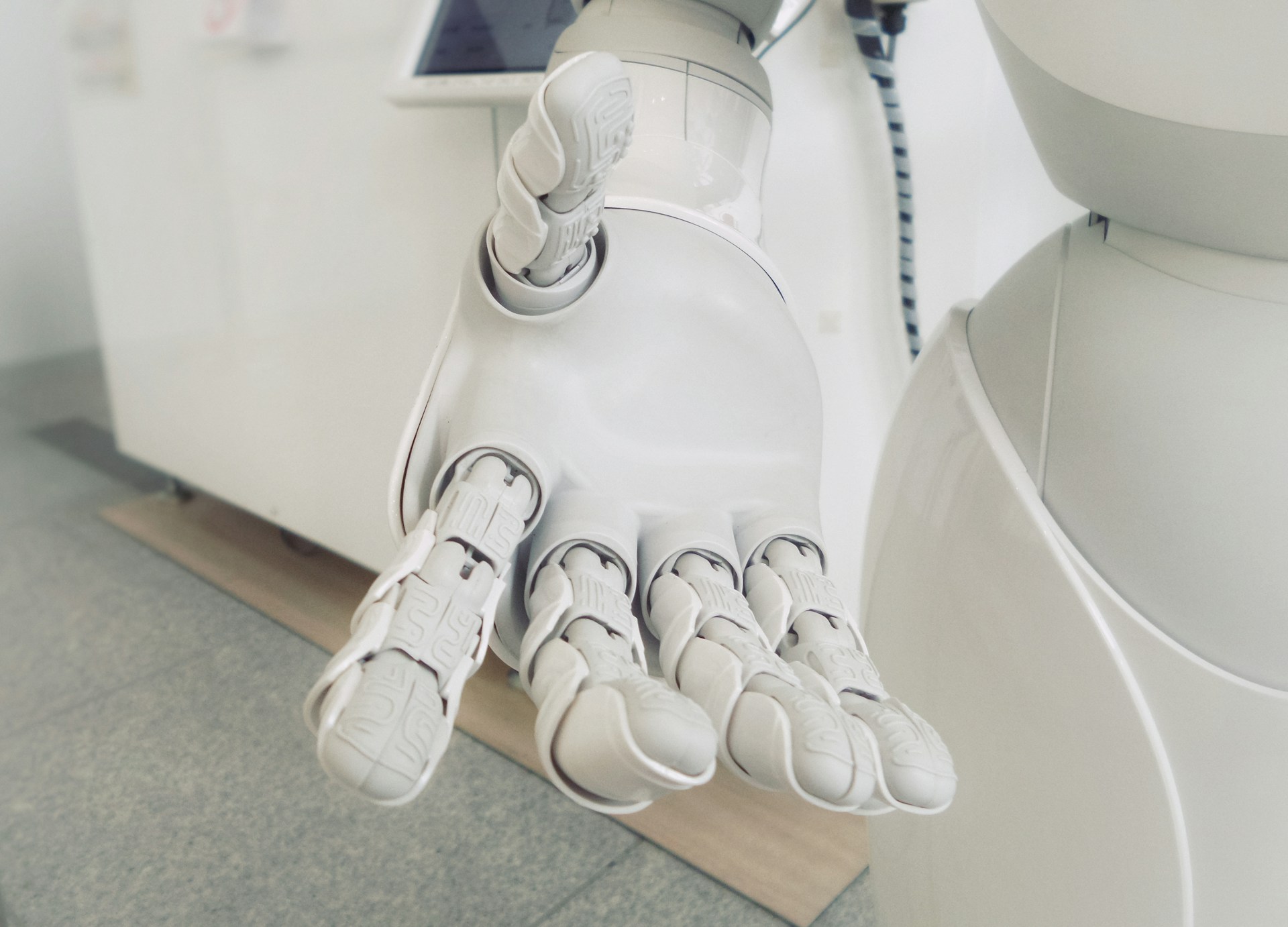
Picture factories where robots don’t stumble—they anticipate obstacles, reroute pallets in real-time, and adapt assembly lines on the fly, slashing downtime by 40%. At CES 2026, Nvidia unveiled Cosmos, a suite of world foundation models transforming physical AI from sci-fi to factory floor reality. This isn’t just another update; Cosmos bridges the notorious sim-to-real divide, enabling robotics to master complex environments via physics-aware simulations. For manufacturing leaders eyeing 2026’s projected 619,000 annual robot installations per the International Federation of Robotics, Cosmos delivers the agile infrastructure for outsized ROI. Dive in to uncover how this powers the physical AI revolution.
What is Nvidia Cosmos?
Nvidia Cosmos represents a leap in robotics AI, comprising open-world foundation models trained on massive synthetic datasets to understand physical interactions, object manipulation, and spatial reasoning. Unlike traditional models siloed to text or images, Cosmos integrates vision-language-action (VLA) capabilities, allowing robots to parse commands like “stack these boxes avoiding the spill” and execute flawlessly. Launched with expansions to Nvidia’s Omniverse platform, it generates hyper-realistic training data billions of times faster than real-world trials.
Key features include:
- Physics engine integration: Simulates gravity, friction, and collisions with 99% real-world fidelity.
- Scalable world modeling: Builds dynamic digital replicas of factories for endless scenario testing.
- Edge deployment ready: Optimized for Jetson hardware, running inference under 100ms latency.
This foundation shifts robotics from rule-based scripting to intuitive, learning-based autonomy, positioning Cosmos as the backbone for 2026’s physical AI surge.
The Sim-to-Real Challenge in Physical AI
Robotics has long battled the sim-to-real gap: models ace virtual worlds but falter in messy reality, with deployment success rates hovering below 30% due to unmodeled variables like lighting variances or material wear. Perception errors alone cause 25% of industrial robot failures, per recent Deloitte analyses, inflating costs in high-stakes manufacturing. Planning lags compound this—traditional pathfinders ignore dynamic changes, like a worker entering the zone.
Consider legacy systems: They rely on hardcoded maps, brittle to factory tweaks. This rigidity stalls scalability amid MIT Sloan’s forecast of AI factories proliferating in 2026, where all-in adopters demand seamless physical-digital fusion . Enterprises waste millions retraining in hazardous real environments, underscoring why innovations like AI-powered digital twins complement but can’t fully solve these hurdles alone.
How Nvidia Cosmos Closes the Gap
Cosmos tackles sim-to-real head-on by generating domain-randomized data in Omniverse, training models on edge cases like slippery floors or partial occlusions before physical tests. Its VLA architecture lets robots reason multimodally: “See the red pallet? Grasp it gently despite the oil.” Nvidia reports 5x faster convergence to real-world performance versus prior methods.
At CES 2026 demos, Cosmos-powered arms navigated cluttered warehouses autonomously, outperforming baselines by 60% in pick-and-place accuracy. Developers fine-tune via transfer learning, slashing weeks off deployment. This isn’t hype—it’s the engine for physical AI maturity, echoing broader startup success strategies in regulated AI landscapes.
2026 Manufacturing Trends Driving Adoption
Physical AI via Cosmos aligns with seismic shifts:
- Explosive growth: IFR projects 619,000 new installations in 2026, up 8% YoY, fueled by labor shortages.
- “ChatGPT moment” in factories: GenAI robotics, as dubbed by The Economist, automates unstructured tasks like adaptive machining.
- AI factories boom: MIT predicts enterprise “AI factories” with Cosmos-like infra accelerating model iteration 10x .
Warehouse automation exemplifies this—software-AI-robotics convergence cuts fulfillment times 50%, per HY-TEK trends. Early adopters in automotive gain predictive maintenance edges, tying into AI-driven early diagnosis frontiers for equipment health.
Real-World Case Studies
Foxconn pilots Cosmos in iPhone assembly, boosting yield 35% via simulated defect detection—real robots now self-correct mid-process. In logistics, DHL integrates it with AGVs, reducing navigation errors 70% across dynamic DCs, yielding $2M annual savings.
Mercedes-Benz leverages Omniverse-Cosmos for EV battery lines, testing 1,000 virtual variants nightly. Results? 25% faster line ramps, per Nvidia case studies. These wins validate ROI: Payback under 12 months for fleets over 50 units, far beyond software agents.
Implementation Roadmap for Enterprises
Roll out Cosmos strategically:
- Assess and simulate: Map your floor in Omniverse; generate 10M training frames targeting pain points.
- Prototype on Jetson: Fine-tune VLMs with fleet data; validate in shadowed real tests.
- Scale with safeguards: Deploy zero-trust edges; monitor via Nvidia Fleet Command.
- Optimize iteratively: Feed production data back, achieving 95% autonomy in 3 months.
Budget $500K for mid-size pilots, including hardware. Address ethical AI standards by baking explainability into models—log reasoning traces for audits.
Challenges and Future Outlook
Compute demands loom large—Cosmos training needs H100 clusters—but cloud Omniverse democratizes access. Cybersecurity risks, like adversarial perturbations, require WAAP layers. Expect multi-agent swarms by late 2026, orchestrating humanoids with legacy bots.
Forbes predicts physical AI investments hitting $50B by 2027, with Cosmos leading. Despite MIT’s agentic hype caution , robotics delivers tangible value now.
Conclusion
Nvidia Cosmos ignites 2026’s physical AI revolution, turning factories into intelligent organisms for unmatched agility and profit. Don’t lag—harness it to redefine manufacturing supremacy.